

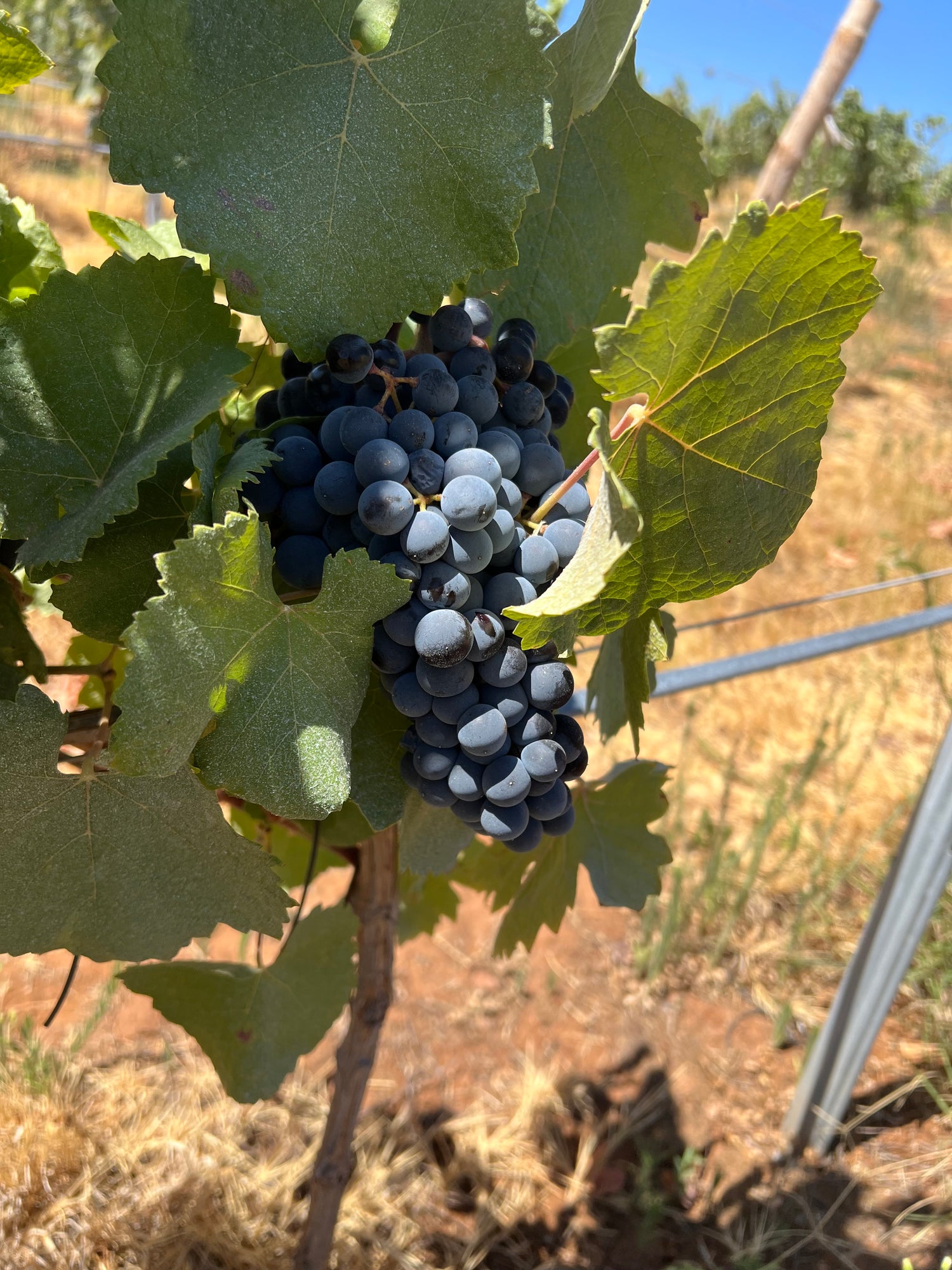
The origin
Herdade da Amada's name originates from one of its owners, Brites Amada, daughter of Diogo Amado, and wife of João Pereira de Abreu, a descendant of a noble Portuguese family and one of the most distinguished in Elvas. The first historical reference to the estate dates back to October 9, 1636.
We have to go back several centuries in the chronological history of Herdade da Amada's existence to truly understand the preciousness of our soils. Throughout the existing historical records of the estate, we can verify that during the 17th century, its exploration was essentially agricultural, with a vegetable garden and a watermill.
The 19th century was a valuable century for the estate. At the beginning of this century, mulberry trees were planted with a view to developing silkworm breeding in Portugal.
In addition to the mulberry trees, its agricultural characteristics remained, with records from the time indicating the existence of a vast orchard and a vineyard in this terroir.
In 2018, Herdade da Amada gained a new lease on life. It was acquired by the Marvanejo Family, who invested in the estate's secular traditions by planting 14 hectares of vineyard.

Herdade da Amada with 14 hectares of terroir
Located in the city of Elvas, it was acquired by the Marvanejo family in 2018, as a result of a family aspiration and dream. This place stands out for its typical Alto Alentejo landscape, where the terrain translates into a diversity of altitudes that play a fundamental role, with its highest point at 306 meters.
The vineyard, installed in medium-textured clay-limestone soils and oriented from Northwest to Southeast, benefits from optimal conditions for its development, with the added value of privileged sun exposure, perfectly suited to each grape variety.

From wild vine to the most genuine aroma
With a unique terroir and distinct profile, the 10 grape varieties planted benefit from granite-based soils and a typical Mediterranean climate, characterized by hot, dry summers and rainy winters.
With unique characteristics, Herdade da Amada is distinguished by having one of the largest terroirs in the Iberian Peninsula, with vines planted using the traditional grafting method. A singular, unique vineyard, where each grape variety planted here was carefully selected.

56,000 vine cuttings
Planting was carried out in March 2019 with bearded rootstock, selected according to soil characteristics, grape varieties, training system and production objectives, after careful soil preparation in terms of fertilization and correction.
The grafting techniques used were cleft grafting and chip budding, at a time when the temperature was favourable, as was soil moisture, which allowed for active sap circulation and tissue turgor.
The grape varieties were defined according to the qualitative objectives we sought for the wines, based on a genetic foundation that could express all the authenticity in terms of quality, as well as adaptability to the region's terroir.
We resorted to the best grafters to plant and graft our vineyards with 10 selected grape varieties.
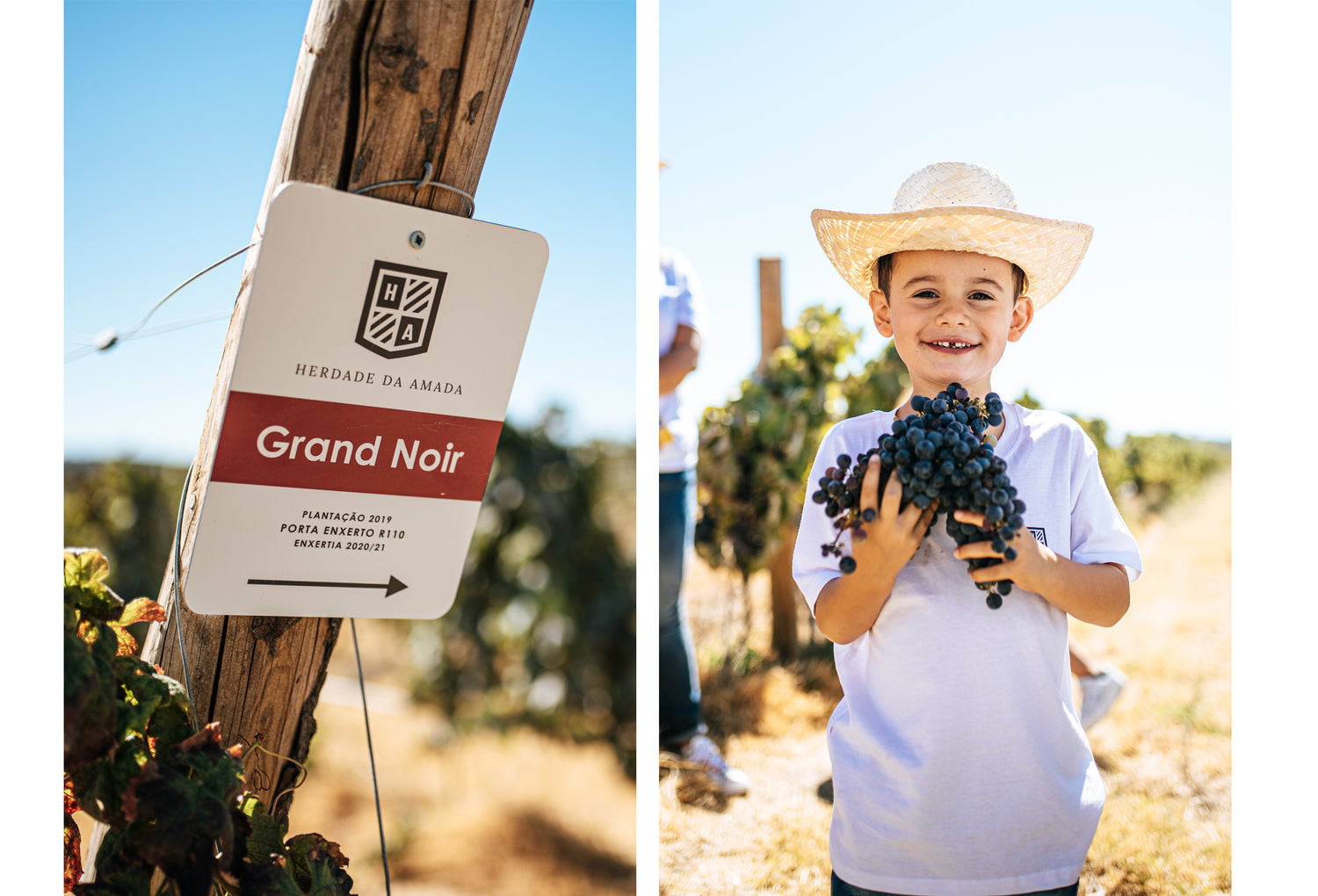
Our grape varieties
Arinto
Fernão Pires
Roupeiro
Verdejo
Alicante Bouschet
Castelão
Tempranillo
Grand Noir
Syrah
Touriga Nacional

Grape harvest
At Herdade da Amada, the grape harvest is the most important time of the year.
After rigorous control and monitoring of maturation, the best grapes are hand-picked into 15 kg boxes and refrigerated until they reach the winery.
Once at the winery, a second manual selection is carried out to ensure that only the best fruit reaches the fermentation tanks.


Winery
In the Herdade da Amada project, we combine modernity and innovation with the tradition of classic and ancestral methods and materials in the production of our wines.
We rely on stainless steel, which today guarantees food safety and quality preservation, but also on the unique and crucial characteristics in the evolution of wines that only wood can provide.
To complement this, we use materials such as clay and concrete, which, like wood, allow for essential micro-oxygenation to work, enhance, and differentiate the unique wines we produce in our terroir.

A unique heritage
Elvas, a border city, classified since 2012 as a UNESCO World Heritage site, for having the largest and most unique fortification and building in the world.
The municipality of Elvas is located in the demarcated wine region of Alentejo, where, as throughout the region, a strong wine culture can be found.
Elvas's wine culture comes from ancestral traditions dating back to the Roman occupation, which in the 21st century adapt to new technologies, producing quality wines.

